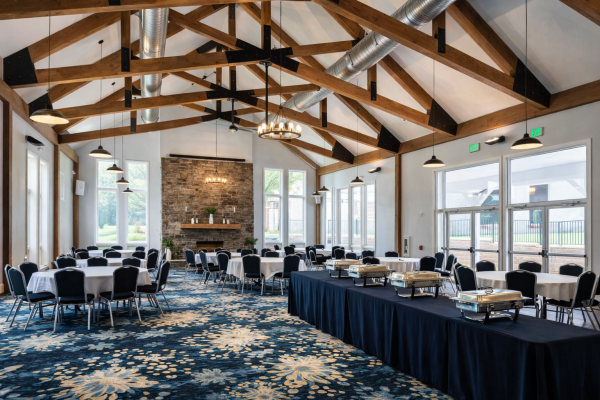
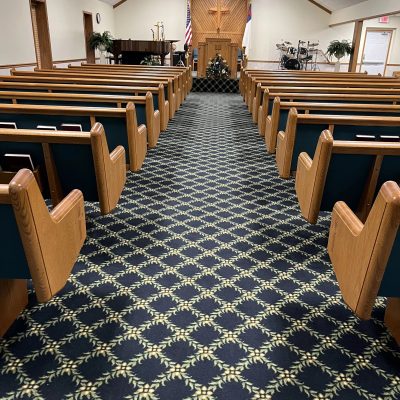
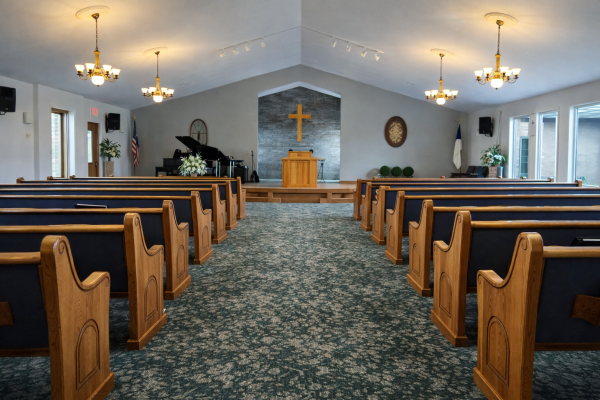
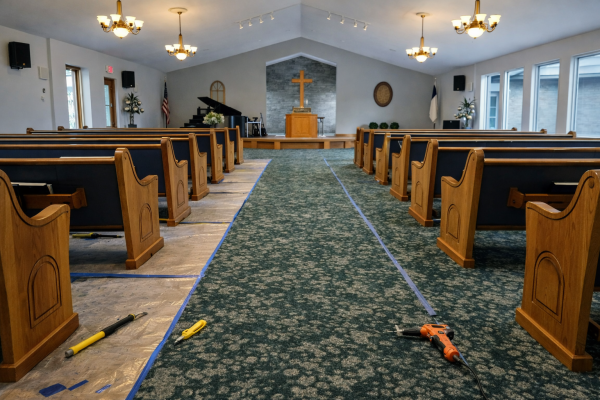
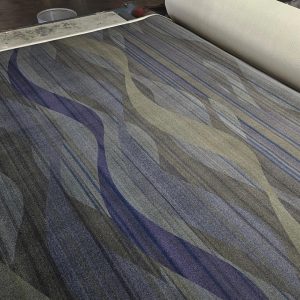
In hospitality environments, corridor flooring must withstand constant use while maintaining a consistent appearance across long stretches of hallway space. Hotel corridors experience some of the most concentrated traffic in a property, with guests, luggage, housekeeping carts, and service equipment moving through these areas throughout the day.
Because of these conditions, many hospitality properties continue to rely on broadloom carpet systems for corridor installations. Broadloom provides a continuous flooring surface that helps maintain visual flow while minimizing the number of seams across long hallway installations.
For a broader overview of hotel carpet systems used in hospitality environments, explore our guide to hotel carpet and hospitality flooring.
What Makes Broadloom Carpet Different
Broadloom carpet refers to carpet manufactured in wide rolls that are installed wall-to-wall across a space. In hospitality environments, this installation format allows large areas such as corridors, guest rooms, and ballrooms to be covered with fewer seams than modular flooring formats.
Because hospitality corridors often extend for long distances, minimizing seam frequency can help improve the overall appearance and durability of the installation.
Broadloom systems also allow patterned carpet designs to flow continuously down hallways, which helps create visual rhythm and directional guidance within the architecture of a property.
For a technical overview of hospitality broadloom construction platforms, see our construction systems documentation.
Seam Reduction in Long Hotel Hallways
One of the primary reasons broadloom carpet remains widely used in hotel corridors is its ability to reduce seam frequency.
Every seam in a carpet installation represents a potential stress point, particularly in environments where rolling luggage and housekeeping carts apply repeated lateral forces across the floor surface.
Because broadloom carpet is produced in wide rolls, installers can often cover long corridor sections with fewer seams compared to modular flooring formats.
Reducing seam frequency helps maintain visual continuity while also supporting long-term structural stability in high-traffic hallway environments.
Managing Traffic Patterns in Hotel Corridors
Hotel corridor traffic typically follows a predictable travel path down the center of the hallway. This concentrated traffic pattern creates compression zones that can gradually affect carpet appearance and performance.
Hospitality carpet systems used in corridors are often engineered with pattern structures that help distribute visual wear across the surface of the carpet.
Patterned carpet can help conceal soil accumulation and traffic lanes, allowing corridor installations to maintain a more consistent appearance between cleaning cycles.
For a deeper explanation of how corridor carpet is engineered for these conditions, see our hotel corridor carpet engineering documentation.
Broadloom vs Carpet Tile in Hospitality Spaces
While carpet tile systems are sometimes used in commercial environments, many hospitality projects still prefer broadloom installations for long corridor runs.
Broadloom allows pattern layouts to flow uninterrupted through hallways and public spaces, which can be important when maintaining visual consistency across multiple floors of a property.
Carpet tile systems may be used in certain situations where modular replacement strategies are prioritized, but broadloom installations continue to provide strong performance and aesthetic continuity in many hospitality environments.
For a technical comparison of these flooring formats, see our guide to broadloom vs carpet tile in hospitality environments.
Selecting Hospitality Carpet for Corridor Installations
Choosing the right carpet system for hotel corridors involves balancing durability, design objectives, and long-term maintenance considerations.
Hospitality properties often evaluate carpet construction platforms based on traffic intensity, pattern design goals, and renovation planning strategy across guest room and corridor installations.
Understanding how these variables interact helps property owners select flooring systems that maintain durability while supporting the design identity of the property.
Explore available hospitality carpet styles and construction systems used in hotel environments here.