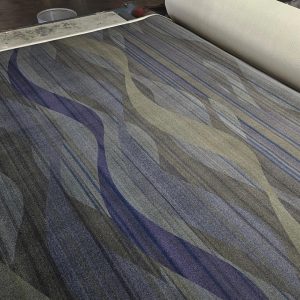
Hotel corridor carpet must perform under some of the most demanding conditions in a hospitality property. Continuous guest traffic, rolling luggage, housekeeping carts, and service equipment create directional wear patterns that quickly expose weaknesses in poorly specified flooring systems.
Understanding how hospitality carpet is engineered for these environments helps property owners and facility managers select construction platforms that maintain durability, visual continuity, and predictable lifecycle performance.
For a broader overview of hospitality flooring systems, see our guide to hotel carpet and hospitality carpet selection.
Why Hotel Corridors Experience the Highest Carpet Wear
Hotel hallways concentrate foot traffic from hundreds or thousands of guests each day. Unlike guest rooms where traffic is distributed across the space, corridor traffic typically follows a narrow travel path.
This creates:
- concentrated compression zones
- directional fiber wear
- seam stress from rolling luggage
- accelerated soil accumulation along traffic lanes
Because of these conditions, corridor carpet systems must be engineered differently than carpet used in guest rooms or conference spaces.
Construction Systems Used for Hotel Corridor Carpet
Several construction platforms are commonly used for hospitality corridors depending on design goals and traffic intensity.
Broadloom hospitality carpet is widely used when continuous visual flow and minimal seams are required across long hallway installations.
Woven systems such as Axminster and Wilton are often selected when pattern complexity and structural stability are required in large hospitality environments.
For a deeper technical explanation of these construction systems, see our hospitality carpet construction documentation.
Density, Backing Stability, and Seam Performance
Durability in hotel corridor carpet is influenced by several structural variables:
• yarn density and stitch rate
• backing stability
• pattern alignment planning
• seam placement strategy
Because rolling luggage and service carts generate lateral forces, seam integrity and backing structure are particularly important in hallway installations.
Our technical documentation explains how these engineering variables influence long-term durability in hospitality environments.
Planning Corridor Carpet for Hotel Renovation Cycles
Most hospitality properties replace carpet according to renovation cycles that align with brand standards and capital improvement schedules.
Corridor flooring replacement is typically planned to maintain pattern continuity across multiple floors and installation phases.
This requires coordination between:
• pattern layout planning
• dye lot consistency
• phased installation sequencing
Understanding these planning considerations can help reduce disruption during renovation projects and maintain a consistent appearance throughout the property.
For more detail, see our hospitality carpet renovation planning guide.
Selecting the Right Carpet for Hotel Corridors
Selecting the correct carpet system for hotel corridors involves balancing design, durability, and installation logistics.
Property owners and designers often evaluate multiple construction platforms depending on traffic exposure, renovation planning strategy, and aesthetic requirements.
Explore available hotel carpet options and hospitality flooring systems here.